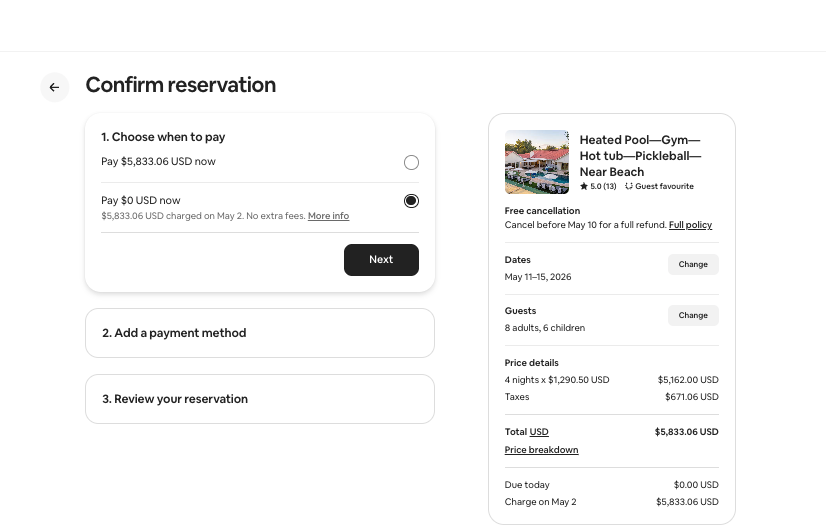
In Q4 2025, Airbnb launched Reserve Now, Pay Later in the US. Guests can book eligible stays with zero dollars upfront and pay closer to check-in. Within one quarter, over 70% of eligible bookings adopted the feature. Airbnb credited it as a direct driver of the booking acceleration they saw in Q4 — their strongest growth quarter of the year at 10% year-over-year.
For hosts, this is not just a payment feature. It fundamentally changes booking psychology, cancellation risk, and how you should think about your calendar 60–90 days out.
Why 70% Adoption Matters
When seven out of ten guests choose the zero-upfront option, it tells you something important about booking friction. The number one reason guests hesitate on Airbnb is financial commitment. They want to lock in the dates, but they don't want to pay $1,500 today for a trip that is three months away.
Reserve Now, Pay Later removes that friction entirely. More guests are booking earlier, further out, with less hesitation. Airbnb's data confirms this: lead times continued to lengthen in Q4 2025, meaning guests are reserving stays further in advance than they were a year ago.
What This Means for Your Calendar
If guests are booking further out, your pricing 60–90 days from now matters more than it used to. Many hosts focus on the next 2–3 weeks — adjusting rates for upcoming gaps, running last-minute promotions. That still matters. But the guests who are now filling your calendar months in advance are doing so because the financial barrier is gone.
This creates a new risk: your calendar fills early at rates you set months ago. If you don't have a forward-looking pricing strategy — one that accounts for seasonal demand, events, and comp set movement — you lock in revenue at today's rate for peak-season nights that should command a premium.
The Cancellation Question
Zero upfront cost lowers the commitment bar. Guests who would have waited to be sure are now booking speculatively — "lock it in, decide later." Combined with Airbnb's new Limited cancellation policy (free cancellation up to 14 days before check-in), you should expect cancellation rates to shift.
This doesn't mean your net bookings will drop. Airbnb's Q4 data shows the opposite — bookings accelerated. But it means your confirmed-to-stayed ratio may change. The practical implication: don't panic when you see a cancellation on a booking that was made months ago. The guest likely replaced themselves by rebooking a different property. And your newly opened night will often rebook at a higher rate if you're in peak season.
How to Adapt Your Strategy
- Price forward, not backward: Review your rates 60–120 days out. Are they set for peak demand, or are they still at your base rate? Guests are booking that far out now.
- Use minimum stay rules strategically: If speculative bookings concern you, consider slightly longer minimum stays during high-demand periods to filter for committed guests.
- Monitor your cancellation rate: Track it monthly. A small increase is normal with RNPL. A large increase means your pricing or cancellation policy needs adjustment.
- Don't underprice peak nights: The biggest risk of RNPL is that early bookings lock in rates before you realize demand is higher than expected. Set forward rates aggressively for known peak periods.
Reserve Now, Pay Later is good for your business. More bookings, longer lead times, less friction. But only if you price your forward calendar like a revenue manager instead of a host who checks rates once a month.
Related: if you run a PMS, Airbnb’s 15.5% host-only fee already changed your pricing math — here’s how to recalibrate.